



Collagen vs. Collagen Peptides: What's the Real Difference?
Collagen, gelatin, and collagen peptides all come from the same protein, but they're processed to different sizes. Collagen peptides (also called hydrolyzed collagen) are the form your body can actually absorb. They're broken into small fragments that pass through your gut wall and travel to the tissues that need them. If you're supplementing collagen for skin, joints, or gut health, peptides are the form that works.
You'll see "collagen" and "collagen peptides" used like they're the same thing on supplement labels, blog posts, and Instagram ads. Most of the time, nobody bothers to explain the difference.
That's a problem, because the difference is the whole reason collagen supplements work in the first place.
Collagen in its natural form is a massive molecule. Your gut can't absorb it efficiently. Collagen peptides are that same protein broken down into fragments small enough to actually get into your bloodstream. Same source material, completely different usability. Understanding the distinction helps you read labels, evaluate products, and know whether what you're taking can do what it claims.
What Is Collagen, Exactly?
Collagen is a structural protein. It's the most abundant protein in your body, making up roughly 30% of your total protein content. It provides the framework for your skin, bones, tendons, ligaments, cartilage, blood vessels, and gut lining.
Think of it as biological scaffolding. Without it, tissues lose their shape, their elasticity, and their ability to handle mechanical stress. This is why collagen decline with age shows up as wrinkles, joint stiffness, weaker tendons, and slower recovery from injuries.
In its native state, collagen is a triple helix: three polypeptide chains wound tightly around each other. That structure is incredibly strong, which is exactly what makes it useful in your body. But it's also what makes it nearly impossible to digest and absorb as a supplement. The molecule is simply too large, roughly 300,000 daltons, for your gut to break down and use efficiently.
So eating raw collagen (like gnawing on a tendon) gives your body some amino acids, but it's a slow, inefficient process. That's where processing comes in.
From Collagen to Peptides: How the Breakdown Works
There are three forms of collagen you'll encounter in supplements and food, and they sit on a spectrum from large and hard to absorb to small and highly bioavailable.
Native triple helix. Found in bone broth, connective tissue. Hard to digest.
Heat-treated collagen. Dissolves in hot liquid. Gels when cooled. Partially broken down.
Enzymatically hydrolyzed. Dissolves in anything. No gelling. Highly absorbable.
Intact collagen is the full-size protein as it exists in animal tissue. When you make bone broth, you're extracting collagen from bones and connective tissue. Some of it partially denatures during cooking, but the molecules are still very large.
Gelatin is collagen that's been partially broken down through heat. It's the stuff that makes bone broth gel in the fridge. Gelatin dissolves in hot water but not cold, and it forms a gel as it cools. It's easier to digest than intact collagen, but the molecules are still relatively large, typically 10,000 to 100,000 daltons.
Collagen peptides (also called hydrolyzed collagen or collagen hydrolysate) are gelatin that's been broken down further through enzymatic hydrolysis, a controlled process that uses specific enzymes to cut the protein into much smaller fragments. The result is peptides in the range of 2,000 to 5,000 daltons. They dissolve in hot or cold liquids, don't gel, and are absorbed far more efficiently than either gelatin or intact collagen.
All three terms describe the same source protein at different stages of processing. The key difference is size, and size determines whether your body can actually use it.
| Property | Intact Collagen | Gelatin | Collagen Peptides |
|---|---|---|---|
| Molecular size | ~300,000 Da | 10,000–100,000 Da | 2,000–5,000 Da |
| Dissolves in cold liquid | No | No | Yes |
| Forms a gel | No | Yes | No |
| Absorption efficiency | Low | Moderate | High |
| Common source | Bone broth, connective tissue | Cooking gelatin, gummies | Collagen supplements |
How Does Your Body Actually Absorb Collagen Peptides?
This is where the science gets interesting, and where the "just eat more collagen" advice falls short.
When you ingest collagen peptides, your digestive system doesn't break them all the way down into individual amino acids. Research shows that a significant portion survives digestion as dipeptides and tripeptides, small two- and three-amino-acid fragments like Pro-Hyp (proline-hydroxyproline) and Gly-Pro-Hyp (glycine-proline-hydroxyproline). These fragments are absorbed intact through the intestinal wall via specialized peptide transporters.
A 2017 study by Yazaki et al. published in the Journal of Agricultural and Food Chemistry demonstrated that these specific collagen-derived peptides are transported into the bloodstream and accumulate in skin tissue. A 2024 randomized crossover study published in Frontiers in Nutrition confirmed that collagen peptides from bovine, porcine, and fish sources all produce relevant plasma concentrations of bioactive peptides, regardless of animal source or molecular weight within the typical supplement range.
Once in circulation, these peptides do two things. They serve as direct building blocks for collagen-rich tissues. And they act as signaling molecules, stimulating fibroblast cells to ramp up their own production of collagen, elastin, and hyaluronic acid. Your body doesn't just use the collagen you ingest. It uses those peptide fragments as a signal to make more of its own.
This dual mechanism is why collagen peptides are effective and why intact collagen and gelatin are less so. The absorption step is the bottleneck, and peptides clear it efficiently.
What About Collagen Types? Does Type Matter?
You'll see supplement labels referencing Type I, Type II, and Type III collagen. These are real distinctions, but they're simpler than the marketing makes them sound.
Your body contains at least 28 identified types of collagen. The three you'll encounter most in supplements are Types I, II, and III, which account for the vast majority of collagen in your body.
Skin, Bones, Tendons
Makes up ~90% of your body's collagen. Provides structure to skin, bones, tendons, and ligaments. The most studied type in supplement research.
Cartilage & Joints
Found primarily in elastic cartilage. Provides cushioning and flexibility in joints. Typically sourced from chicken sternum in joint-specific supplements.
Skin, Muscles, Organs
Works alongside Type I in skin, blood vessels, and organs. Often found in bovine collagen supplements alongside Type I. Declines with age.
Most collagen peptide supplements, including ours, are derived from bovine sources and contain primarily Types I and III. These are the types most associated with the skin, joint, and connective tissue benefits you see in the research.
The honest take on collagen types: the type matters less than the form. A Type I collagen supplement that hasn't been hydrolyzed into peptides will absorb poorly. A well-hydrolyzed peptide from any source will absorb efficiently. Form first, then type.
What Collagen Peptides Support (And What They Don't)
Collagen peptides are rich in glycine, proline, and hydroxyproline. These amino acids are specifically useful for building and maintaining collagen-based structures in your body, which means they support skin elasticity and hydration, joint comfort and cartilage health, tendon and ligament strength, gut lining integrity, and hair and nail growth.
The research behind these benefits is consistent and growing. Multiple meta-analyses have confirmed improvements in skin hydration and elasticity with 4 to 8 weeks of daily collagen peptide supplementation. Joint benefits typically appear over 3 to 6 months. (For a detailed breakdown of those timelines, check out our post on how long collagen takes to work.)
Collagen Peptides Don't Build Muscle
Collagen is not a complete protein. It's low in leucine, the amino acid that triggers muscle protein synthesis, and it's missing or deficient in several other essential amino acids. If your goal is building muscle, recovering from hard training, or maximizing body recomposition, collagen won't get you there on its own.
Collagen's value for athletes is real, but it lives in a different lane: building the connective tissue infrastructure (tendons, ligaments, fascia) that lets you train hard without breaking down. That's genuinely important. It's just not the same as building muscle.
For the full picture on how amino acid profiles shape what a protein can do, check out our guide to protein and amino acids.
Why This Matters When You're Choosing a Product
Now you know the chain: intact collagen → gelatin → collagen peptides. And you know peptides are the form that absorbs efficiently. So when you're evaluating a collagen supplement, look for labels that say "collagen peptides" or "hydrolyzed collagen." If a product just says "collagen" without specifying, you don't know what you're getting.
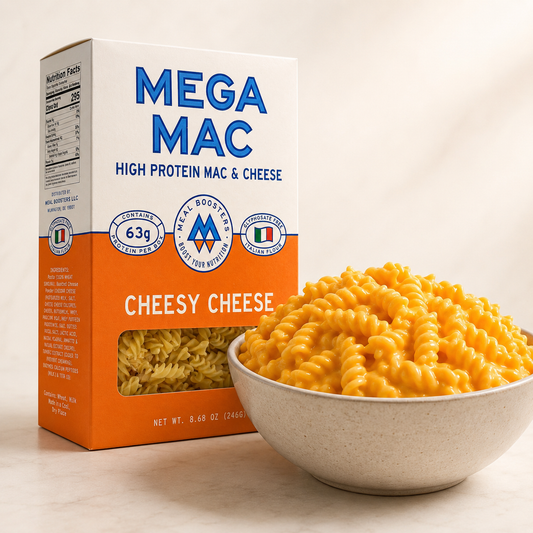
That's what our Meal Boosters line is built on: collagen peptides, not intact collagen. Every flavor uses hydrolyzed collagen peptides as the protein base. The cheese-based flavors (Cheesy Cheese, Parmesan, White Cheddar) add a layer on top of that: naturally occurring whey from real aged cheese, which broadens the amino acid profile slightly beyond what a typical collagen peptide supplement offers. It's a meaningful differentiator vs. other collagen brands, though it doesn't make them equivalent to a whey-based product.
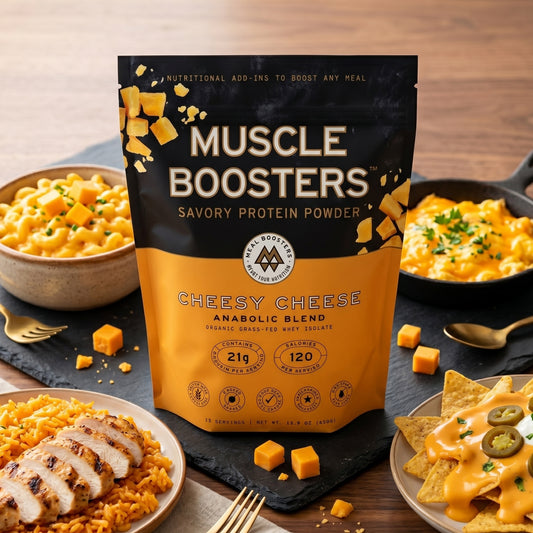
If your goal is pairing collagen's connective tissue benefits with muscle-building support, that's what Muscle Boosters was designed for. It combines whey protein isolate with collagen peptides in one blend, so you get the leucine-driven muscle response alongside the joint and tendon protection.
Frequently Asked Questions
Collagen is the full-size protein found naturally in your body. Collagen peptides (also called hydrolyzed collagen) are collagen that's been broken down through enzymatic hydrolysis into much smaller fragments, typically 2,000 to 5,000 daltons. The smaller size is what makes peptides absorbable through your gut, while intact collagen molecules are too large for efficient absorption.
Yes. Collagen peptides and hydrolyzed collagen are two names for the same thing: collagen protein that's been enzymatically broken down into small, bioavailable peptide fragments. Some brands also use "collagen hydrolysate." All three refer to the same end product.
No. Gelatin is a partially broken-down form of collagen that dissolves in hot water and gels when cooled. Collagen peptides are broken down further into much smaller fragments that dissolve in hot or cold liquids and don't gel. Peptides are more bioavailable than gelatin because of their smaller molecular size.
Your gut breaks collagen peptides into dipeptides and tripeptides, small two- and three-amino-acid fragments like Pro-Hyp and Gly-Pro-Hyp. These are absorbed intact through the intestinal wall via specialized peptide transporters, enter the bloodstream, and travel to target tissues where they serve as both building blocks and signaling molecules that stimulate your body's own collagen production.
No. Collagen peptides lack sufficient leucine, the amino acid that triggers muscle protein synthesis, and are missing or low in several other essential amino acids. Collagen supports joints, tendons, ligaments, skin, and gut health. For muscle building and recovery, you need a complete protein source like whey.
Most collagen supplements contain Type I collagen, which makes up about 90% of the collagen in your body and provides structure to skin, bones, tendons, and ligaments. Bovine-sourced supplements typically contain Types I and III. Type II collagen, found primarily in cartilage, is less common in general supplements and usually appears in joint-specific formulas.
All Meal Boosters products are built on collagen peptides, not intact collagen. The cheese-based flavors (Cheesy Cheese, Parmesan, White Cheddar) combine collagen peptides with naturally occurring whey from real aged cheese. Buffalo and Unflavored are pure collagen peptides. Coffee Boosters adds pink Himalayan sea salt for hydration support.
Absolutely. Many customers use both. Meal Boosters provides collagen peptides for daily skin, joint, and gut support in food you're already making. Muscle Boosters combines whey protein isolate with collagen peptides for muscle building and connective tissue protection around training. They complement each other rather than overlap.
Every Meal Boosters product is built on collagen peptides, not intact collagen. Browse the full line for savory, kitchen-ready collagen you can mix into food you're already making.