




Recovery Is Where the Gains Actually Happen

Recovery Is Where the Gains Actually Happen
Whey builds muscle. Collagen rebuilds everything holding it together. Here's why the combination is the upgrade most people are missing.
Whey protein drives muscle protein synthesis through leucine. Collagen supports the joints, tendons, and connective tissue that let you actually train hard — and recover to do it again. Most people are optimizing one and ignoring the other. New research shows that combining them addresses a gap that whey alone can't fill.
The Part of Recovery Most People Skip
You hit a hard workout. Your muscles are sore, you're a little beat up, and you reach for your protein shake. Makes sense. Protein after training is one of the most well-supported habits in sports nutrition.
But here's something worth thinking about: what's doing the actual work when your body repairs itself between sessions?
The answer isn't just your muscles. It's your entire musculoskeletal system — muscles, yes, but also the tendons, ligaments, cartilage, and connective tissue that hold everything together, transfer force, and absorb impact every time you move.
Whey protein is exceptional at supporting muscle repair. It's high in leucine, the amino acid that flips the switch on muscle protein synthesis, and it delivers a complete essential amino acid (EAA) profile. What it doesn't provide in meaningful amounts are glycine and proline — the amino acids your connective tissue is built from.
This isn't a knock on whey. It's just a gap most people have never been told about.
Why Whey and Collagen Work Differently
Protein isn't one thing. It's a collection of amino acids, and different protein sources deliver different amino acid profiles. That's why the protein source matters — not just the gram count.
Muscle Tissue
- High in leucine — the primary trigger for muscle protein synthesis
- Complete essential amino acid (EAA) profile
- Fast-digesting, rapidly available post-workout
- Supports muscle building, body recomposition, recovery
Connective Tissue
- Rich in glycine and proline — the amino acids collagen is built from
- Supports tendons, ligaments, cartilage, and joint tissue
- Reduces activity-related joint discomfort
- Helps connective tissue keep pace with muscle training demands
Think of it this way: leucine drives the rebuild of the engine (your muscles). Glycine and proline help reinforce the chassis everything runs on (your connective tissue). You need both to build something that performs and holds up.
Whey protein ingestion after exercise increases myofibrillar (muscle) protein synthesis rates. But research confirms that whey doesn't provide sufficient glycine to support connective tissue synthesis — because whey's amino acid profile was never designed to do that job.
What the Research Actually Shows
Whey Gets the Muscles. The Combo Gets Both.
A 2024 study published in Medicine & Science in Sports & Exercise set out to answer a specific question: does a whey-collagen blend increase both myofibrillar (muscle) and muscle connective protein synthesis rates? The answer was yes to both — a result that whey alone hadn't reliably produced.
A Maastricht University study found that a whey and collagen protein blend increased both myofibrillar and muscle connective protein synthesis rates at rest and during recovery from exercise. Whey alone had only increased myofibrillar rates. The blend covered both bases.
This matters because connective tissue in and around the muscle — what researchers call "muscle connective protein" — is part of the structural scaffold that supports the contractile fibers doing the actual work. When you train hard, you stress that scaffold right alongside the muscle itself.
The Glycine Problem Whey Can't Solve
Here's the mechanism behind the gap. Research published in the International Journal of Sport Nutrition and Exercise Metabolism found something striking: when you ingest whey protein after exercise, plasma glycine levels actually decline — even as your essential amino acids spike. Your body is using glycine faster than whey replenishes it.
Collagen is loaded with glycine. Co-ingesting even a moderate amount of collagen with whey prevented this post-exercise glycine decline entirely, keeping levels elevated for up to six hours of recovery.
Your connective tissue needs that glycine. Without it, recovery in those tissues is working with limited raw materials.
What This Looks Like in Real Performance
It's not just a theoretical advantage. A 2024 integrative review found that in recreationally trained individuals, the group supplemented with a combination of collagen peptides and whey showed a 22% increase in a knee extension performance test, compared to 10% in the whey-only group.
Separate research on connective tissue adaptation found that tendon cross-sectional area significantly increased following long-term resistance training combined with collagen peptide intake — indicating structural tendon remodeling that doesn't happen from training alone.
Tendons transfer every ounce of force your muscles generate. Bigger, more resilient tendons means better force output and lower injury risk. That's not a minor footnote — it's a meaningful performance variable that most people never think to optimize.
Why Most People Are Only Getting Half the Picture
Walk into any gym and you'll find people who are dialed in on whey. They know their macros, they know their post-workout window, they've probably tried half a dozen different brands. That's great — whey protein is genuinely effective and well worth taking.
What those same people usually aren't doing: thinking about their connective tissue at all. Until something starts hurting.
Joint discomfort and tendon issues are some of the most common reasons people scale back training or lose consistency. A 24-week study on people with activity-related joint pain found that collagen hydrolysate supplementation significantly improved joint pain across multiple measures — at rest, when walking, when standing, and during load-bearing activities.
The point isn't that you're injured. The point is that keeping your connective tissue healthy is how you stay in the game long enough for the muscle gains to compound.
Strength isn't just about the muscle that contracts. It's about the tissue network that transmits and absorbs force every rep, every sprint, every session. Optimizing recovery means optimizing all of it — not just the part that shows up in a shaker bottle.
How to Use Both Together
The good news: you don't need a complicated protocol. The research points to a practical setup that fits into a normal training week.
Whey protein shines in the post-workout window. It's fast-digesting, leucine-rich, and well-supported for muscle recovery. That's the timing to prioritize it.
Collagen is used differently. It doesn't need to be tied strictly to the post-workout window — daily intake is what matters for connective tissue support, since collagen synthesis is a slower, longer-term process than acute muscle protein synthesis. Some emerging research suggests that taking collagen 30–60 minutes before exercise may be particularly effective for supporting connective tissue, but the more important factor is simply consistency.
Used together, they're not competing for the same job. Whey drives the acute muscle-building response. Collagen keeps the infrastructure supporting it.
Whey + collagen in one product. High leucine to drive muscle protein synthesis, plus glycine and proline to support the connective tissue around it. The complete post-workout package.
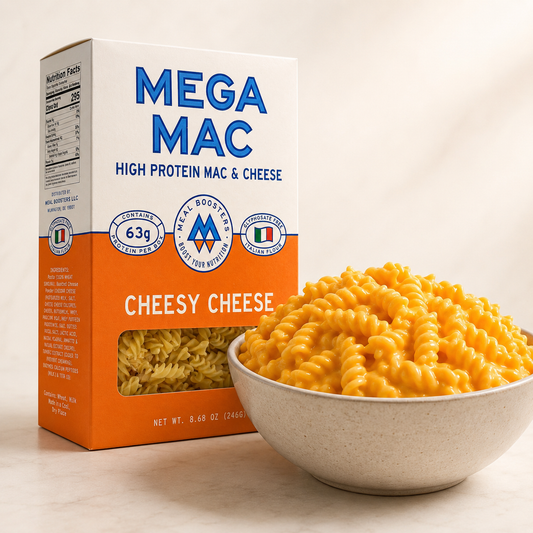
→ Around TrainingCollagen built into your daily cooking. Stir it into whatever you're already making. Keeps your joints, tendons, and connective tissue supported on rest days and training days alike.
→ Every Day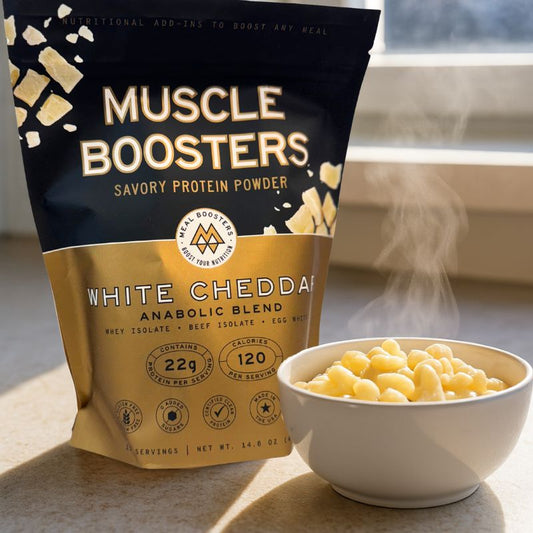
Muscle Boosters
Organic grass-fed whey isolate blended with collagen peptides. The leucine to trigger muscle recovery, and the glycine and proline to support everything holding that muscle together. Savory white cheddar — designed to mix into food, not a shaker.
Most whey brands don't think about your joints. We do.
Many of our customers stack both: Muscle Boosters around training for its whey-collagen blend, and Meal Boosters stirred into daily meals for consistent collagen support on every other hour of the day. Different formats, same system.
Frequently Asked Questions
No — and this is an important distinction. Collagen is low in leucine, the essential amino acid that triggers muscle protein synthesis. Collagen on its own does not drive muscle building the way whey does. What collagen does support is the connective tissue around and within muscle — tendons, ligaments, cartilage, and the structural scaffolding that holds the whole system together. For muscle building, you need whey (or another high-leucine protein source). For connective tissue support, you need collagen. That's why the combination matters.
Yes, and many of our customers do exactly that. Muscle Boosters is their performance nutrition — used around training for its whey-collagen blend. Meal Boosters is their daily routine — collagen stirred into food they're already making, covering joint health and long-term connective tissue support. They serve different purposes and complement each other well. They're not competitors; they're teammates.
For body recomposition and fat loss, whey protein is your primary tool. Its high leucine and full essential amino acid profile help preserve lean muscle mass while in a caloric deficit — which is how you lose fat without losing strength. Muscle Boosters (whey + collagen) is built for this use case. Maintaining lean mass is what keeps metabolism from tanking during a cut, and keeping your joints healthy means you can keep training intensely through it.
Consistency matters more than timing for collagen and joint health. Collagen synthesis is a slower, longer-term process than acute muscle recovery — it builds up over weeks of regular intake, not hours. Some research suggests pre-exercise timing (30–60 minutes before training) may be beneficial for supporting connective tissue, but daily use at whatever time fits your routine will deliver the core benefit. Most of our customers add Meal Boosters to food they're already making — breakfast, lunch, dinner — so it never becomes a separate step to remember.
Whey is excellent for muscle recovery — it's one of the most well-researched and effective protein sources for that specific job. But research shows that whey doesn't provide sufficient glycine to support connective tissue synthesis after training. In fact, plasma glycine levels decline after whey ingestion because your body is drawing on glycine reserves that whey doesn't replenish. Collagen fills that gap. Together, they support a more complete recovery — muscle and connective tissue both.
Two things. First, it blends organic grass-fed whey isolate with collagen peptides in the same product — so you're getting leucine-driven muscle support and glycine/proline for connective tissue in one serving. Most whey brands don't think about your tendons and joints. We do. Second, it's savory. White cheddar flavor, designed to mix into food you're already eating — mac and cheese, eggs, soups, sauces — rather than a sweet shake. That's a meaningful quality-of-life difference if you're using it every day.
Joint pain is usually a downstream symptom of connective tissue that hasn't kept pace with training demands. Supporting your tendons, ligaments, and cartilage before problems show up is the smarter play than waiting until something hurts. The athletes who tend to benefit most from collagen are the ones who train consistently and hard — because high training volume puts ongoing mechanical stress on connective tissue that needs nutritional support to adapt and hold up over time.
Whey is high in leucine and delivers a full essential amino acid (EAA) profile — this is what makes it effective for muscle protein synthesis. Collagen is rich in glycine, proline, and hydroxyproline — the structural amino acids that make up connective tissue. Collagen is not a complete protein (it lacks tryptophan and is low in other EAAs), which is why it doesn't drive muscle building the same way whey does. The two proteins serve complementary roles, which is why combining them covers more ground than either one alone.
Train Hard. Recover the Whole System.
Gains don't happen in the gym. They happen in the recovery window — when your body rebuilds muscle tissue, repairs connective tissue, and comes back stronger than before.
Whey handles the muscle side exceptionally well. But glycine-rich collagen addresses the connective tissue side that whey leaves behind. Together, they support a more complete recovery than either one can deliver alone.
Most people are only getting half the picture. Now you have the full one.